Recording Engineers, Producers and Associated Recording Industry Professionals


Message Board - Industry Professionals General Discussion
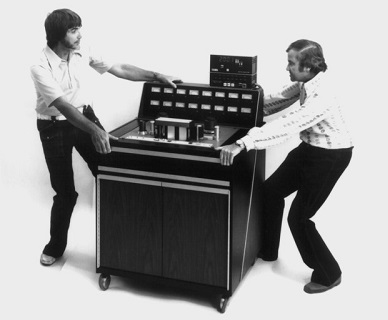

Tom Dowd

The music industry is a complex system of many different organizations, firms and individuals and has undergone dramatic changes in the 21st century.

However, the majority of the participants in the music industry still fulfill their traditional roles, which are described below.

There are three types of property that are created and sold by the recording industry: compositions, recordings and media (such as CDs or MP3s). There may be many recordings of a single composition and a single recording will typically be distributed into many media.


Recording Engineers, Producers and Associated Recording Industry Professionals


Alexander M. Poniatoff
Al Schmitt
Angel Sandoval
Bennie
Bernard Beck
Bernard "Pretty" Purdie
Bert De Coteaux
Bill Whitlock
Brad Blackwood
Bob Crewe
Bob Gaudio
Bob Hughes
Bob Johnston
Bob Olhsson
Bob Shoppe
Carla Humphries
Charles Fox
Chris Juried
David Rubin
Deane E. Jensen
Dennis Moody
Denny LeRoux
Don Meehan
Don Puluse
Eddie Ciletti
Edward "Sonny" Stitt
Eleanor Louise "Ellie" Greenwich
Eric Schilling
Esmond Edwards
EveAnna Dauray Manley
Frank Muccio
Fred Catero
Gary US Bonds
Gary Gottlieb
George Andrews
George "Shadow" Morton
George Schowerer
Glen Kolotkin
Gordon Clark
Jack Mullin
Janis Ian
Jeep Harned
Jim Brown
Jim Reeves
Joe Venneri
Joel Katz
John G. McKnight
John Simon
Judy Worth Friedsam
Larry Janus
Lenny Stea
Les Paul
Lou Waxman
Melba Moore
Neil Muncy
"Papa Don" Schroeder
Paul Christensen
Phil Ramone
Phyllis Juried
Randy Irwin
Ray Dolby
Ray Moore
Richard P. "Richie" Havens
Richard Killough
Robert (Bob) Morritt
Roger Nichols
Roy Halee
Rupert Neve
Russ Payne
Scott Glasel
Steve Morales
Steve Puntolillo
Skip Juried
Ted Brosnan
Terry Manning
Tom Dowd
Tom Muccio
Unidentified People of the Recording Industry
Vince Gagliano
Warren "Gates" Nichols
Zal Yanovsky

Compositions

Compositions are created by songwriters or composers and are originally owned by the composer. The composer may sell the copyright to another party. Compositions are (traditionally) licensed or "assigned" to publishing companies. A publishing contract specifies the business relationship between the copyright owner and the publishing company. The publishing company (or a collection society operating on behalf of many such publishers, songwriters and composers) collects fees (known as "publishing royalties") when the composition is used. A portion of the royalties are paid by the publishing company to the copyright owner, depending on the terms of the contract. Typically (although not universally), the publishing company will provide the owner with an advance against future earnings when the publishing contract is signed. A publishing company will also promote the compositions, such as by acquiring song "placements" on television or in films.

Recordings

Recordings are created by recording artists, often with the assistance of record producers and audio engineers. They were traditionally made in recording studios (who are paid a daily or hourly rate) in a recording session. In the 21st century, advances in recording technology have allowed many producers and artists to create "home studios", bypassing the traditional role of the recording studio. The record producer oversees all aspects of the recording, making many of the logistic, financial and artistic decisions in cooperation with the artist. Audio engineers (including recording, mixing and mastering engineers) are responsible for the audio quality of the recording. A recording session may also require the services of an arranger or studio musicians.
Recordings are (traditionally) owned by record companies. A recording contract specifies the business relationship between a recording artist and the record company. In a traditional contract, the company provides an advance to the artist who agrees to record music that will be owned by the company. The A&R department of a record company is responsible for finding new talent and overseeing the recording process. The company pays for the recording costs and the cost of promoting and marketing the record. For physical media (such as CDs), the company also pays to manufacture and distribute the physical recordings. Smaller record companies (known as "indies") will form business relationships with other companies to handle many of these tasks. If contractually bound to do so, the record company pays the recording artist a portion of the income from the sale of the recordings, generally known as a mechanical royalty. (This is distinct from the publishing royalty, described above.) This portion is similar to a percentage, but may be limited or expanded by a number of factors (such as free goods, recoupable expenses, bonuses, etc.) that are specified by the record contract. Session musicians and orchestra members (as well as a few recording artists in special markets) are under contract to provide work for hire; they're typically only paid one-time fees or regular wages for their services, rather than royalties.

Physical media

Physical media (such as CDs) are sold by music retailers and are owned by the consumer. A music distributor delivers the physical media from the manufacturer to the retailer and maintains relationships with retailers and record companies. The music retailer pays the distributor, who in turn pays the record company for the recordings. The record company pays mechanical royalties to the publisher, composer, and songwriter via a collection society. The record company then pays royalties, if contractually obligated, to the recording artist. In the case of digital downloads, there is no physical media other than the consumer's hard drive. The distributor is optional in this situation; large online shops may pay the labels directly, but digital distributors do exist to service vendors large and small. When purchasing digital downloads, the consumer may be required to agree to record company and vendor licensing terms beyond those which are inherent in copyright; for example, some may allow freely sharing the recording, but others may restrict the user to storing the music on a specific number of hard drives.

Other uses of recorded music and compositions

Sheet music provides an income stream that is paid exclusively to the composers and their publishing company. When a recording is broadcast (either on radio or by a service such as Muzak), performance rights organisations (such as the ASCAP and BMI in the US, SOCAN in Canada, or MCPS and PRS in the UK), collect a third type of royalty known as a performance royalty, which is paid to composers and recording artists. This royalty is typically much smaller than publishing or mechanical royalties. When recordings are used in television and film, the composer and their publishing company are typically paid through a synchronization license. Subscription services (such as Rhapsody) also provide an income stream directly to record companies, and through them, to artists, contracts permitting.

Regional variations and industry evolution

The industry is further complicated by the fact that the definition of "royalty" and "copyright" varies from country to country and region to region, which changes the terms of some of these business relationships.

In addition to these traditional business relationships, new ways of doing business are being developed in the 21st century. The traditional lines that once divided artist, publisher, record company, distributor, retail and consumer electronics have become blurred. Artists may own their own publishing companies, artist management companies may promote and market recordings on behalf of their clients, artists may promote and market themselves using only free services such as YouTube or social media, consumer electronics companies have become digital music retailers, and so on, in many variations. New digital music distribution technologies have also forced both government and industry to re-examine the definitions of intellectual property and the rights of all the parties involved.

Live music

A promoter brings together a performing artist and a venue owner and arranges contracts. A booking agency represents the artist to promoters, makes deals and books performances. Consumers usually buy tickets either from the venue or from a ticket distribution service such as Ticketmaster. In the US, Live Nation is the dominant company in all of these roles: they own most of the large venues in the US, they are the largest promoter, and they own Ticketmaster.

Choices about where and when to tour are decided by the artist's management and the artist, sometimes in consultation with the record company. Record companies may provide tour support; they may finance a tour in the hopes that it will help promote the sale of recordings. However, in the 21st century, it has become more common to release recordings to promote tours, rather than book tours to promote records.

Successful artists will usually employ a road crew: a semi-permanent touring organization that travels with the artist. This is headed by a tour manager and provides stage lighting, live sound reinforcement, musical instrument tuning and maintenance and transportation. On large tours, the road crew may also include an accountant, stage manager and catering. Local crews are typically hired to help move equipment on and off stage. On small tours, all of these jobs may be handled by just a few roadies, or by the musicians themselves.

Artist management, representation and staff

Artists may hire a number of people from other fields to assist them with their career. The artist manager oversees all aspects of an artist's career in exchange for a percentage of the artist's income. An entertainment lawyer assists them with the details of their contracts with record companies and other deals. A business manager handles financial transactions, taxes and bookkeeping. Unions, such as AFTRA in the U.S., provide health insurance and other services for musicians.

Other income streams

A successful artist functions in the market as a brand and, as such, may derive income from many other streams, such as merchandise or internet-based services. These are typically overseen by the artist's manager and take the form of relationships between the artist and companies that specialize in these products.

Foundational text courtesy of Wikipedia.


Loading

Save up to 81% on your favorite Musical Equipment at American Musical Supply


Recording Engineers, Producers and Associated Recording Industry Professionals

Do you have content, to add, about Recording Engineers, Producers and Associated Recording Industry Professionals or associated topics? Please feel free to Share it, here!

Please Enter Your Title Here

Tell Us Your Story Here![ ? ]

Upload 1-4 Pictures or Graphics (optional)[ ? ]

Add a Picture/Graphic Caption (optional) 

Click here to upload more images (optional)

Author Information (optional)

To receive credit as the author, enter your information below.

Your Name

(first or full name)

Your Location

(ex. City, State, Country)

Submit Your Contribution

Check box to agree to these submission guidelines.


(You can preview and edit on the next page)

What other Visitors have said about Recording Engineers, Producers and Associated Recording Industry Professionals

Click below to see contributions from other visitors to this page...

Norma Beecroft 
Norma Beecroft is part of a generation of pioneering professional composers that firmly established Canada's place on the world's musical map. An award-winning …

Fritz Pfleumer 
Fritz Pfleumer (20 March 1881 in Salzburg – 29 August 1945 in Radebeul) was a German-Austrian engineer who invented magnetic tape for recording sound. …

Vladimir K. Zworykin Not rated yet
Vladimir Kosmich Zworykin (July 29, 1888 – July 29, 1982) was a Russian-merican inventor, engineer, and pioneer of television technology. Zworykin invented …

Marvin Camras Not rated yet
Marvin Camras (1916–1995) was an electrical engineer and inventor who was widely influential in the field of magnetic recording. Camras built his first …

Charles Ginsburg Not rated yet
Charles Ginsburg (1920-1992) was an engineer and the leader of a research team at Ampex which developed one of the first practical videotape recorders. …

Norma Beecroft, continued... Not rated yet
Pictures courtesy of Norma Beecroft.

Édouard-Léon Scott Not rated yet
Édouard-Léon Scott de Martinville (1817-1879) is credited with the invention of the phonautograph. The phonautograph is the first instrument containing …

Gary Vandy Not rated yet
I opened a Studio, in the Grove, in 1970 while at the University of Miami. Also had Location Sound Recordings Inc. at the same time. In 1972 I opened Studio …

Click here to write your own.


 Return from People of the Recording Industry to History of Recording - Homepage 


Share with your Friends!


Share Your Content!
Share Your Content!


Studer J37

Magnetic Tape Recorders/Reproducers


SSL SL4000

Consoles


Frankie Valli Singers

Recording Sessions


History of Recording's Online Store

History of Recording's Online Store


Outboard Gear

Outboard Gear


People of the Recording Industry

People of the Recording Industry


pro audio forums

Forums of the Recording Arts
Glossary

Glossary of Audio